

In a world where smartphones can track your steps and fridges can order groceries, it’s no surprise that astro technology is taking center stage. Imagine a future where satellites not only map the stars but also help us navigate life’s cosmic challenges. From enhancing communication to revolutionizing space exploration, astro technology is the unsung hero of our tech-driven lives.
Overview of Astro Technology
Astro technology encompasses a range of tools designed for space exploration and communication. Innovations in satellite technology have significantly shaped how data is collected and transmitted. Spacecraft equipped with advanced sensors gather real-time information about planetary environments, improving our understanding of the cosmos.
Satellites play a central role in global communications. They facilitate instant connectivity for millions of users, enabling efficient information exchange. High-resolution imaging satellites provide critical insights into weather patterns and environmental changes, supporting disaster management efforts and climate research.
Astro technology also contributes to navigation systems. Global Positioning Systems, or GPS, rely on a network of satellites to provide precise location data. This technology enhances various sectors, including transportation, agriculture, and emergency services, ensuring optimal routing and resource allocation.
Space telescopes, such as the Hubble Space Telescope, enhance observational astronomy. These instruments capture detailed images of distant galaxies, contributing to scientific discoveries and expanding humanity’s knowledge of the universe.
Robotic missions, using advanced astro technology, explore planetary surfaces. Rovers equipped with state-of-the-art instruments analyze soil and atmospheric conditions, driving further exploration of potential habitats beyond Earth.
Investments in astro technology indicate a commitment to advancing human capabilities in space. Government agencies and private companies collaborate to innovate and expand exploration boundaries. Emerging technologies, such as satellite internet, promise to revolutionize connectivity in remote areas, bridging gaps in accessibility.
Overall, astro technology continues to influence how society understands and interacts with space, shaping a future where the possibilities are limitless.
Key Components of Astro Technology
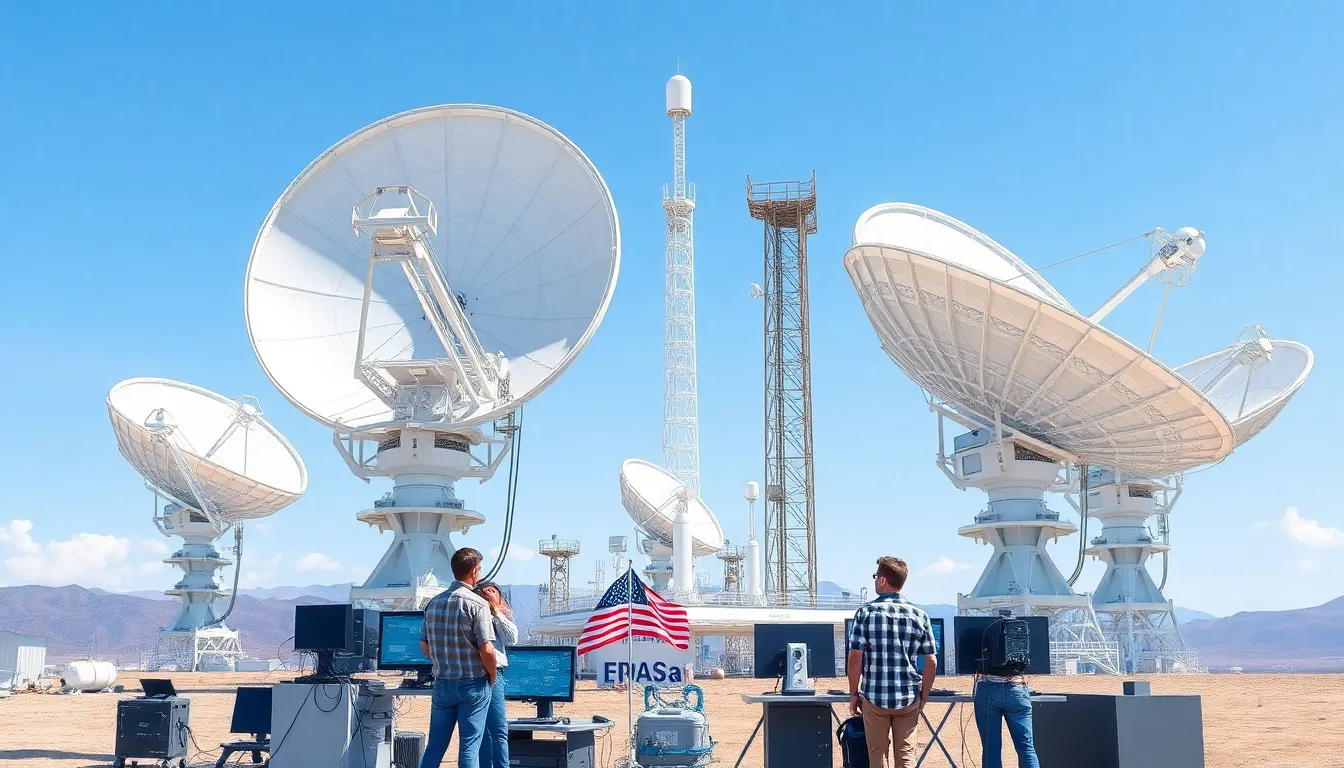
Astro technology integrates various critical components that enhance space exploration and communication systems.
Satellites
Satellites serve as the backbone of astro technology. They collect data and facilitate global communication, enabling voice and internet services. Advanced satellite systems support various applications, including climate monitoring and navigation. Weather satellites, for instance, deliver real-time information that helps predict severe weather events. Additionally, low Earth orbit satellites enable faster data transmission, improving accessibility in remote regions. Their role in global positioning systems enhances navigation accuracy across numerous fields, such as transportation and agriculture.
Ground Stations
Ground stations play an essential role in managing satellite operations. These facilities communicate with satellites, ensuring steady data flow and command execution. Each station is equipped with antennas and receiving equipment that monitor satellite health and performance. Real-time tracking capabilities enhance responsiveness and troubleshooting during missions. Furthermore, ground stations facilitate data analysis for immediate decision-making in emergency situations. Collaboration between multiple ground stations extends coverage and improves service continuity across various regions.
Software Systems
Software systems underpin the functionality of mega astro technology. They analyze data collected from satellites, transforming raw information into actionable insights. Advanced algorithms optimize navigation, climate modeling, and satellite maintenance. Innovative software enables seamless communication between satellites and ground stations, ensuring efficient data transmission. Machine learning techniques enhance predictive analytics, offering enhanced forecasting capabilities. Software systems drive the evolution of astro technology, adapting to emerging challenges and maximizing efficiency in space operations.
Applications of Astro Technology
Astro technology plays a vital role in various sectors, enhancing our understanding of space and improving daily living. Key applications include space exploration, earth observation, and communication.
Space Exploration
Space exploration benefits significantly from advancements in astro technology. Sensors on spacecraft gather extensive data about planetary environments. Missions studying Mars and other celestial bodies rely on these technologies for real-time information. Robotic missions equipped with specialized instruments analyze terrains and conditions critical for potential habitability. Notable examples include the Mars rovers, which explore the surface and send back detailed findings. Innovations continue to push the boundaries of what is possible in space, driving the quest for knowledge beyond Earth.
Earth Observation
Earth observation utilizes satellites to monitor environmental changes from above. Weather satellites play a crucial role in predicting severe weather events, providing early warnings to mitigate disasters. Data collected assists in climate modeling and understanding atmospheric phenomena. Remote sensing technologies deliver insights into urban development and natural resource management. For instance, agricultural monitoring relies on satellite data to optimize crop yields. By tracking changes over time, astro technology supports sustainable practices and informs policy decisions that impact populations globally.
Communication
Satellites revolutionize global communication. Internet and voice services depend on satellite networks to connect remote areas. Low Earth orbit satellites enhance data transmission speeds, improving accessibility for underserved communities. Advanced communication systems ensure consistent service, critical for emergency response and recovery efforts. Moreover, innovations like satellite internet expand connectivity, bridging gaps in urban and rural settings. The ability to communicate instantaneously fosters collaboration and strengthens relationships across vast distances.
Challenges in Astro Technology
Astro technology faces several significant challenges that must be addressed for its continued advancement. Technical limitations and regulatory issues pose barriers to the full realization of its potential.
Technical Limitations
Developing astro technology encounters inherent technical limitations. Satellite lifespan typically ranges from 10 to 15 years, demanding frequent replacements and upgrades. Data transmission rates often fluctuate, particularly in remote or obstructed areas, leading to delays and inconsistent communication. Sensor technology, while advanced, struggles with accuracy in harsh environments, impacting data collection. Power constraints for satellites and spacecraft restrict their capabilities, especially for long-term missions. These limitations hinder the efficiency of operations and require ongoing innovation.
Regulatory Issues
Navigating regulatory issues complicates the progress of astro technology. Licenses for satellite launches must align with international agreements, leading to lengthy approval processes. Space debris poses a growing concern, prompting regulators to impose stricter guidelines for satellite end-of-life disposal. Compliance with frequency allocation rules is essential to avoid signal interference, creating challenges for new entrants in the market. National security and privacy laws restrict the use of certain technologies, adding another layer of complexity. These factors necessitate careful planning and coordination among stakeholders in the field.
Future Trends in Astro Technology
Innovations continue to emerge in astro technology, shaping various sectors. Satellite constellations will see substantial growth, enhancing global internet coverage. Companies like SpaceX’s Starlink demonstrate the potential for connecting underserved regions, fostering educational and economic opportunities.
Development in small satellite technology enhances accessibility for research and communication. Universities and startups increasingly leverage CubeSats to conduct experiments in low Earth orbit, driving innovation at a lower cost.
Artificial intelligence integration into satellite systems offers real-time data processing capabilities. Algorithms analyze extensive datasets, improving decision-making in fields like agriculture and disaster response. Researchers anticipate AI advancements will optimize satellite operations, reduce costs, and enhance service reliability.
Emerging propulsion technologies promise to change spacecraft capabilities. Electric propulsion systems increase efficiency in deep-space missions, enabling longer-duration explorations. Exploration of asteroids and distant moons for potential resources becomes more feasible with these advancements.
Increased collaboration between private companies and governments is evident in astro technology. Public-private partnerships support ambitious missions, such as lunar bases and Mars colonization. This collaborative approach accelerates technological evolution and reduces risks associated with space exploration.
Regulatory frameworks evolve to accommodate advancements in astro technology. Streamlined processes aim to address the challenges of satellite launches and end-of-life procedures. As concerns regarding space debris grow, initiatives that prioritize responsible space use will gain traction.
Continued investment in astro technology indicates commitment to future capabilities. Funding from both governmental and private entities enables exploration of new frontiers. Companies and organizations dedicated to astro technology will drive discoveries, shaping how society understands and interacts with space.
Astro technology stands at the forefront of innovation, shaping the way society engages with space and enhancing everyday life through improved communication and exploration. As advancements continue to emerge, the integration of artificial intelligence and small satellite technology promises to redefine accessibility and efficiency in data collection.
The collaboration between private enterprises and government agencies is crucial for overcoming existing challenges, paving the way for ambitious projects that could transform humanity’s presence in space. With ongoing investments and evolving regulations, the future of astro technology is bright, offering exciting prospects for exploration and connectivity that will benefit generations to come.


