

Space. The final frontier. It’s mysterious, vast, and just a little intimidating, kind of like going to your in-laws’ for dinner. But unlike facing a room full of probing questions, our trek into space is grounded in science and technology. You might wonder: how far can we actually travel with the tech we have today? Buckle up as we explore the limits of space travel, breaking down both the incredible and the impractical.
Understanding the Limitations of Current Space Travel Technology
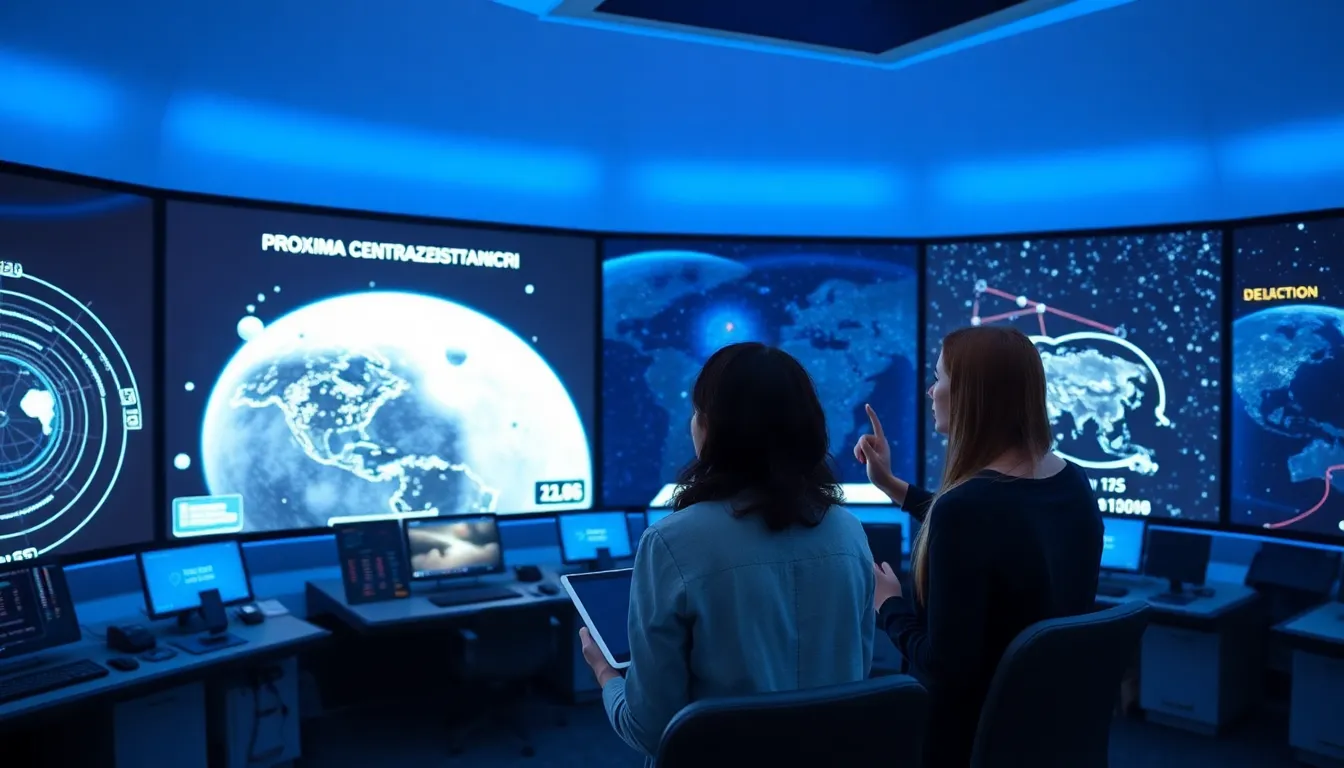
Traveling through space isn’t like hopping on a plane to your favorite vacation spot. It involves complex physics that dictate just how far and fast we can go. The primary culprit limiting our voyages is the speed of light, a cosmic speed limit that cannot be broken. Even our fastest spacecraft, the Parker Solar Probe, barely scratches the surface of this limit, reaching speeds of about 430,000 miles per hour.
In simpler terms, imagine embarking on a road trip that never seems to end. Our nearest star, Proxima Centauri, is over four light-years away. At the speed of the Parker Probe, getting there would take more than 6,700 years. It’s safe to say that we’re not packing our bags for a weekend getaway anytime soon.
Current Spacecraft Capabilities
Manned Missions and Their Range
Humans have made remarkable strides in space travel since Yuri Gagarin stepped into the cosmos in 1961. The International Space Station (ISS) orbits Earth at about 17,500 miles. It’s a hub for research and international cooperation but is not exactly a shuttle to the stars. The farthest humans have traveled is to the Moon, approximately 238,855 miles away. As thrilling as that sounds, it still feels like the backyard compared to the vast expanse of the universe.
Unmanned Missions and Long-Distance Exploration
On the other hand, unmanned spacecraft have journeyed far beyond our immediate neighborhood. The Voyager 1 probe, launched in 1977, is now over 14 billion miles away from Earth. It’s like that one friend who always takes too long to leave the party. Voyager is currently in interstellar space, gathering data on the cosmos. These unmanned missions provide invaluable information, but they come with their own set of limitations in terms of time and follow-up capabilities.
Potential Future Technologies for Space Travel
Nuclear Propulsion Systems
Nuclear propulsion could revolutionize how we think about interstellar travel. Unlike conventional rockets that burn fuel, nuclear methods, like nuclear thermal or nuclear electric propulsion, promise significantly higher efficiency. In theory, a spacecraft using this technology could reach Mars in a fraction of the time it would take using today’s chemical rockets, making it an exciting option for deeper exploration.
Solar Sails and Other Advanced Concepts
Solar sails harness the energy of sunlight, enabling spacecraft to move without traditional fuel. Picture a sailboat navigating the cosmic seas: propelled by the sun’s rays, these sails can theoretically reach astonishing speeds over long distances. While we’re still in the testing phases, the idea captures the imagination, presenting a future where spacecraft may glide effortlessly across the void.
Challenges of Deep Space Exploration
Distance and Time Requirements for Current Missions
As fascinating as space is, it poses numerous challenges that must be addressed before venturing far from home. For instance, consider that current missions to Mars take about six to nine months, this is just scratching the surface of deep space. Problems such as food supply, life support, and psychological well-being become pressing issues when considering the long duration of these missions.
Radiation and Psychological Factors on Long Journeys
The radiation levels in deep space are a significant concern. Unlike Earth, where our atmosphere and magnetic field shield us, space exposes travelers to higher radiation levels. Long-term exposure can lead to serious health risks. Also, the mental toll of isolation must not be underestimated. Long missions could feel more like solitary confinement than an adrenaline-filled adventure.
Looking Ahead: The Future of Space Exploration
Steps Towards Interstellar Travel
If humans are ever to leave our solar system, a leap in technology is crucial. Concepts like the Alcubierre drive, a theoretical faster-than-light spacecraft design, offer tantalizing possibilities. While still firmly in the realm of science fiction, advancements in materials science and energy generation could pave the way for these kinds of futuristic technologies. The future of space exploration hinges not just on existing technologies but on innovative thinking and collaborative international effort.
International Collaboration and Its Role in Space Travel
Exploration of space isn’t just a once-in-a-lifetime solo venture: it demands a collective effort. Collaborative missions, like the ISS, show that pooling resources and expertise can yield extraordinary results. Nations are beginning to understand that sharing costs and knowledge can lead to breakthroughs that propel everyone forward. As we grapple with challenges in deep space exploration, international collaboration may well be the key to unlocking the mysteries of the universe together.


