
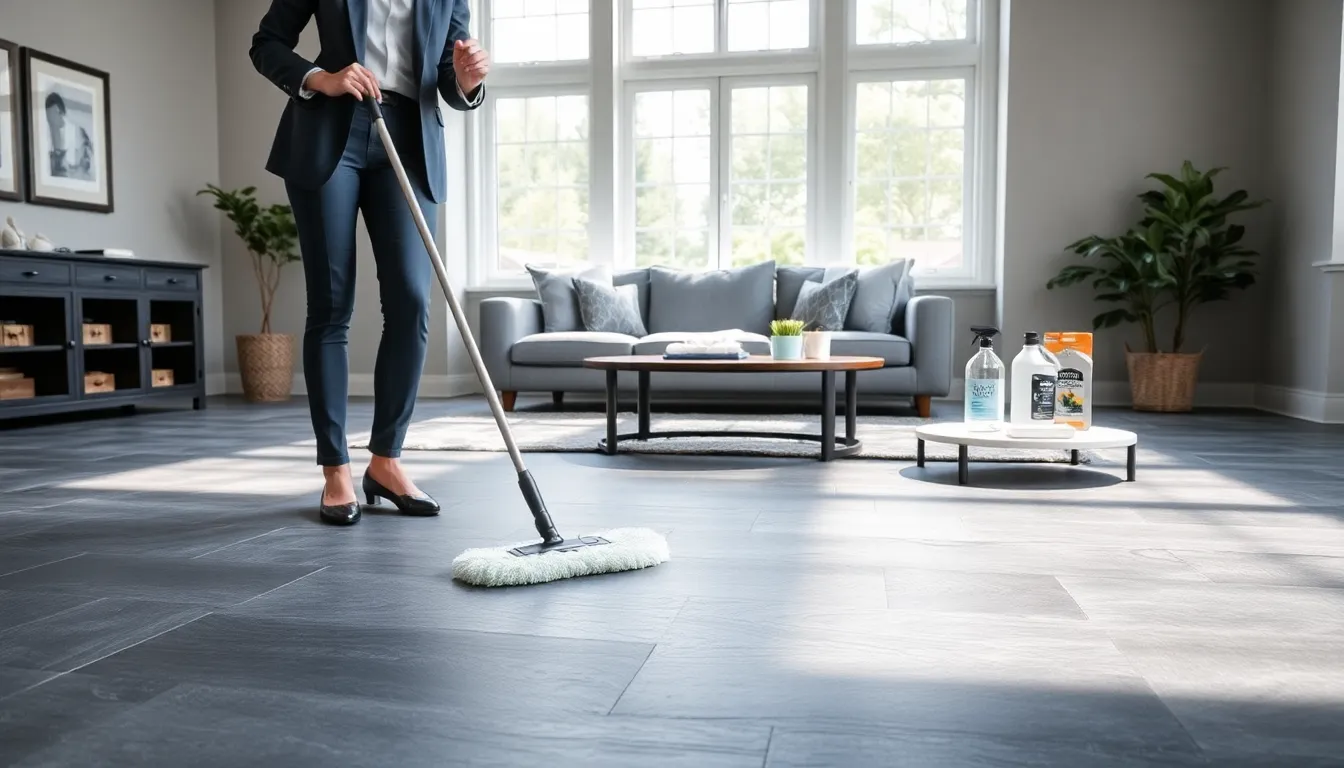
Cleaning slate floors might seem like a chore, but with the right approach, it can be as easy as pie, or at least easier than explaining to your cat why they can’t sit on your freshly cleaned floor. Slate floors are not only stunning but practical too. Let’s jump into how to keep them shining without losing your mind (or your sense of humor).
Understanding Slate Flooring
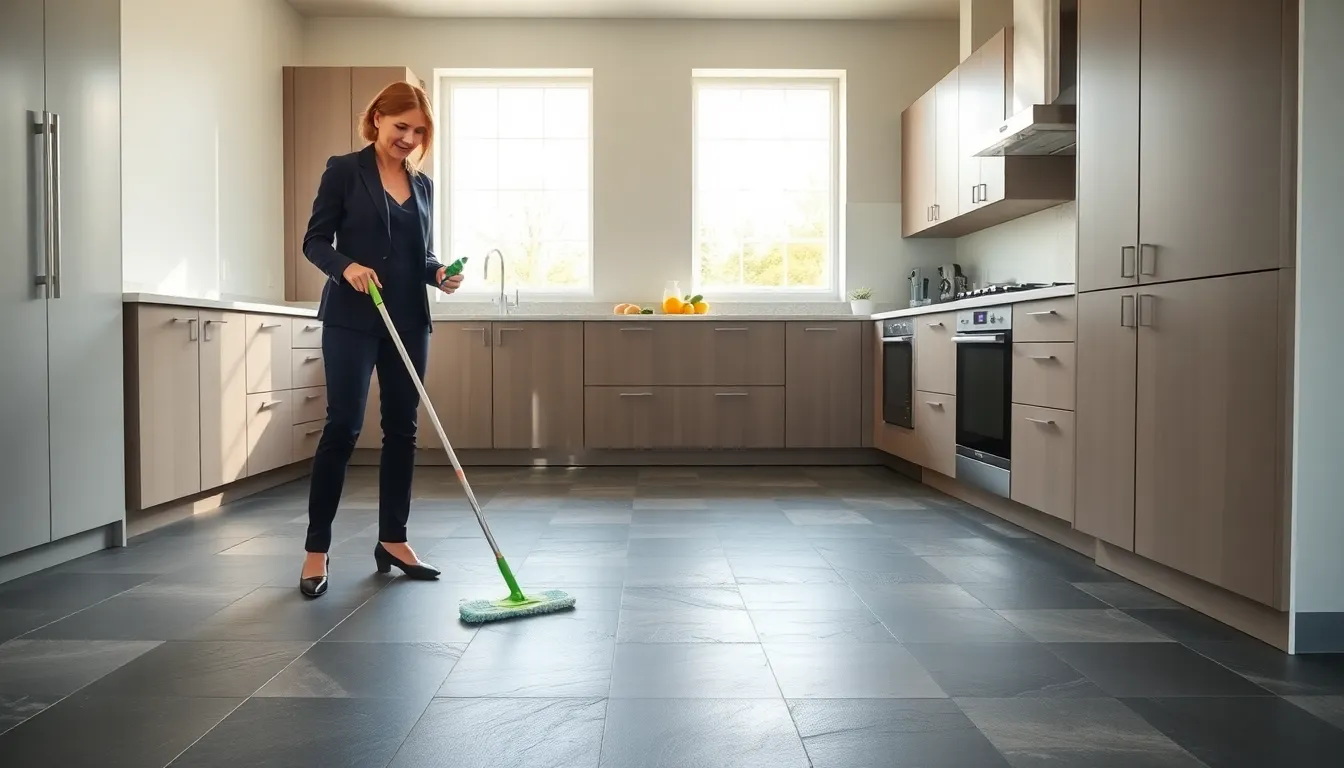
Slate flooring is a natural stone that has been a favorite for centuries. It’s revered for its beauty, but it comes with its own set of quirks.
Benefits of Slate Floors
One of the standout features of slate floors is their durability. These floors can handle rough treatment from pets and kids alike. Plus, they’re versatile enough to fit in both modern and rustic decors. They’re also fireproof and waterproof, which means they keep looking good while standing up to heat and liquids. And let’s not forget their unique colors and textures that can add dramatic flair to any space.
Common Issues with Slate Floors
But, even slate floors can give homeowners a run for their money. Stains, dullness, and scratches can happen, especially in high-traffic areas. Regular maintenance is key: otherwise, dirt and grime will settle in the grooves, creating a less-than-lovely look. And don’t be surprised if your beautiful slate floors transform into a slip-and-slide if not handled properly after cleaning.
Understanding both the benefits and potential challenges of slate flooring will prepare anyone to tackle the next section.
Preparing for Cleaning
Preparation sets the tone for an effective cleaning session.
Tools and Materials Needed
First things first, gather your cleaning supplies. You’ll need:
- A soft bristle broom or vacuum (to prevent scratching)
- A mop (preferably microfiber)
- Bucket
- Mild pH-neutral cleaner
- Rags or towels
- Optional: a steam cleaner for deep cleaning
By assembling your tools beforehand, you save time and make the cleaning process smoother.
Safety Precautions
Cleaning slate floors can involve liquids, so safety is paramount. Ensure the floor is dry before anyone walks on it after cleaning. Use gloves if you’re sensitive to cleaners or hot water. And remember, no one wants to end their cleaning spree with a slip and fall injury.
Step-by-Step Cleaning Process
Now let’s get to the fun part: the cleaning itself.
Daily Cleaning Tips
For daily upkeep, a quick sweep or vacuum is essential. This removes dirt and debris that, if left alone, can scratch the surface. After sweeping, damp-mop with a mixture of water and a mild pH-neutral cleaner. Just don’t soak the floor: slate doesn’t enjoy having a swimming pool, just a light spritz will do.
Deep Cleaning Slate Floors
For occasional deep cleaning, mix the pH-neutral cleaner with warm water in your bucket. Mop the floors using a damp mop, ensuring you wring it out to avoid excess water. For stubborn spots, let the cleaner sit for a few minutes before scrubbing with a soft-bristled brush.
Finish the process by rinsing with clean water and drying thoroughly with clean towels. A dry slate floor is a happy slate floor.
After-Cleaning Care
Cleaning doesn’t stop once the floors are mopped. There’s more muscle to flex in the realm of maintenance.
Sealing Slate Floors
Sealing your slate floors is vital for protection. A good sealant can prevent stains and scratches from making a permanent home on your floors. Apply a stone sealant according to the manufacturer’s instructions, generally every 6 to 12 months, to keep your floors looking fabulous.
Maintaining Your Slate Floors
Simple daily habits can extend the beauty of your slate. Using rugs at entrance points can trap dirt before it even gets to the floor. Also, wipe up spills immediately to prevent them from turning into stains. Regular cleaning and occasional resealing will keep those slate floors looking like they just walked off a showroom floor.



