

Imagine it’s dinner time, and you’ve got a craving for some juicy chicken, but your dinner plans are frozen solid. Don’t panic! Thawing frozen chicken doesn’t have to take all day. In fact, with a few clever tricks, it can be as quick as a microwave popcorn break—minus the burnt kernels.
Importance of Proper Thawing
Proper thawing of frozen chicken plays a significant role in food safety. Thawing correctly minimizes the risk of bacterial growth, which can lead to foodborne illnesses. Ensuring an even thaw supports consistent cooking, giving chicken the ideal texture and flavor.
Thawing methods vary in speed and safety. The refrigerator method takes time but provides the safest option, as it keeps chicken at a stable temperature. The cold water method offers a quicker alternative when time is limited. This method retains the chicken’s quality while minimizing risks associated with improper thawing.
Microwave thawing is often the fastest but not always recommended. This method can lead to uneven thawing, where sections of the chicken may begin to cook. It’s essential to cook chicken immediately after thawing in the microwave to avoid any health risks.
Knowing the importance of proper thawing encourages safer cooking practices. Early planning helps avoid the last-minute rush while ensuring the chicken comes out flavorful. Being aware of the risks associated with improper thawing empowers home cooks to make informed decisions.
Understanding these aspects leads to better kitchen management, enabling families to enjoy delicious meals without compromising safety. By prioritizing proper thawing techniques, individuals maintain their health and ensure tasty dishes every time.
Methods for Thawing Frozen Chicken Fast
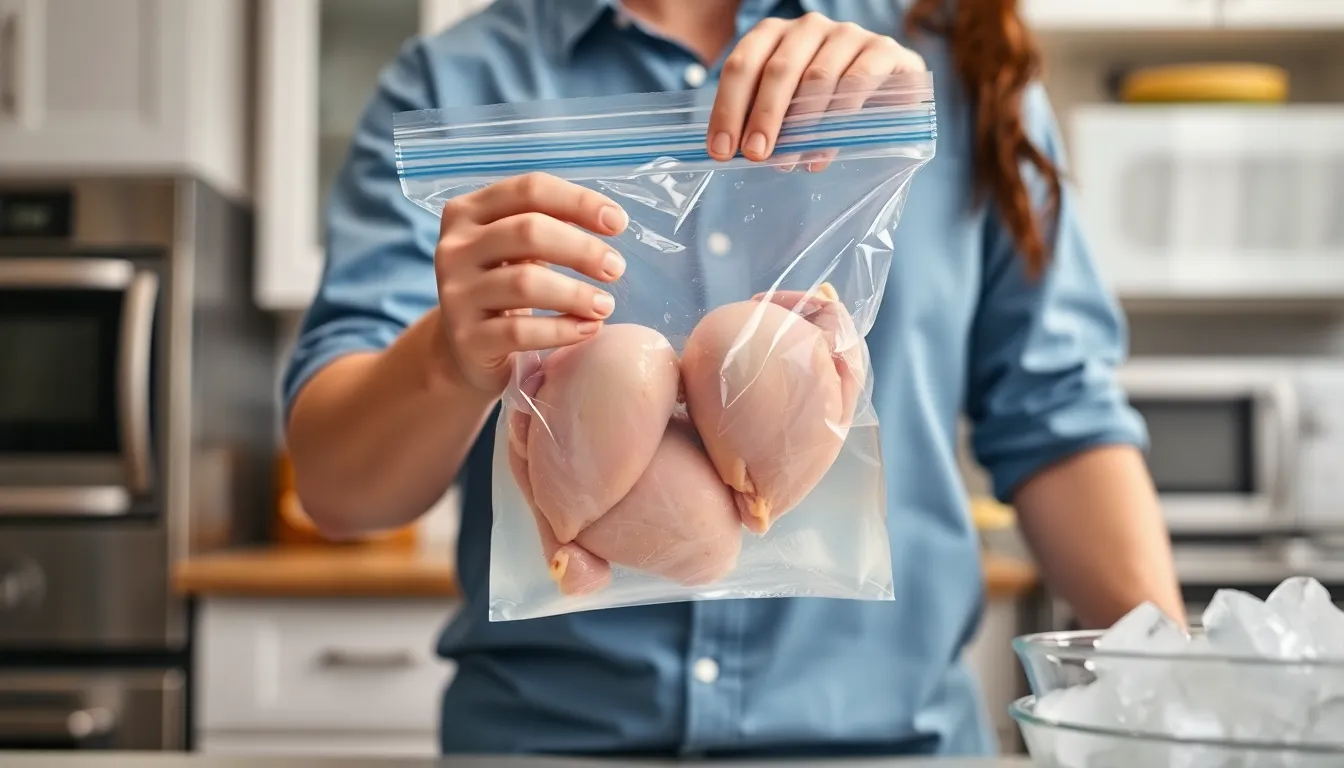
Thawing methods vary in speed and safety. Some methods help preserve chicken quality while minimizing health risks.
Cold Water Method
The cold water method effectively thaws frozen chicken within an hour. Submerge the chicken in cold water, ensuring it’s in a leak-proof bag to prevent contamination. Change the water every 30 minutes to maintain a cold temperature. This method keeps the chicken safe while speeding up the process. Time may vary based on the chicken’s size, with small pieces taking less time than whole chickens. Always cook the chicken immediately after thawing to ensure food safety.
Microwave Method
The microwave method ranks as the fastest option for thawing chicken. Set the microwave to the defrost setting, adjusting the time based on the chicken’s weight. Use this method cautiously, watching for any hot spots that may cook the meat unevenly. Partial cooking can occur if not monitored closely. It’s crucial to cook the chicken immediately after using the microwave, as some areas might have reached temperatures that encourage bacterial growth. This method is convenient but should be used with care to avoid food safety issues.
Tips for Safe Thawing
Safe thawing methods are crucial for preventing foodborne illnesses. Proper practices minimize the risk of bacterial growth on chicken.
Avoiding Bacterial Growth
Bacterial growth poses significant health risks. To ensure safety, always use leak-proof packaging while thawing. Cold water and the refrigerator keep chicken at safe temperatures. For efficient thawing using cold water, change the water every 30 minutes. After thawing in the microwave, cooking chicken immediately is essential to prevent bacteria from multiplying. Storing thawed chicken in the refrigerator for more than two hours increases the likelihood of contamination. Heeding these guidelines ensures a safe thawing process.
Ensuring Even Thawing
Even thawing guarantees consistent cooking results. Avoid stacking chicken pieces on top of one another, as this leads to uneven thawing. Using the cold water method allows rapid heat transfer, ensuring all parts thaw uniformly. When microwaving, middle pieces may cook sooner than edges; therefore, arranging chicken evenly helps. Checking the temperature with a food thermometer verifies even thawing. Adjusting placement can enhance thawing results, avoiding any risk of partially cooked sections. Following these practices encourages culinary success and safety.
Cooking Chicken After Thawing
Cooking chicken after thawing requires attention to temperature and timing for food safety. It’s essential to cook chicken immediately after using methods like cold water or microwave thawing. This practice ensures that any bacteria that may develop during thawing are eliminated through proper cooking.
Using a food thermometer guarantees that chicken reaches the safe internal temperature of 165°F (74°C). Checking thickest parts of the meat is crucial, as they tend to take longer to cook. Avoid cooking frozen chicken or chicken that hasn’t been properly thawed, as this can result in uneven cooking.
Oven baking is a popular method for cooking thawed chicken, allowing for even cooking and the development of rich flavors. Grilling chicken provides a smoky flavor and crispy texture. Pan-searing is another quick method that locks in juices, leading to a tender interior.
To enhance flavor, marinating chicken before cooking adds depth and moisture. Using oil, vinegar, and various spices can elevate the dish. The marinating time should be between 30 minutes and 2 hours for optimal flavor infusion.
Plan on allocating 20 to 30 minutes for cooking chicken breasts, depending on thickness. Thighs generally require a bit longer, usually around 30 to 40 minutes. Keep in mind that cooking times may vary based on the method used and the size of the chicken pieces.
After cooking, resting the chicken for a few minutes allows juices to redistribute throughout the meat. This technique leads to a more flavorful and tender result. Following these steps ensures delicious, safe meals that highlight the quality of the chicken.
Thawing frozen chicken quickly doesn’t have to be a daunting task. By utilizing the cold water method or the microwave approach, home cooks can effectively reduce wait times while ensuring food safety. It’s essential to remember that cooking chicken immediately after thawing helps eliminate any potential bacteria.
With the right techniques and attention to detail, delicious meals are just moments away. Embracing these methods not only simplifies meal prep but also enhances the overall cooking experience. By following these guidelines, anyone can enjoy perfectly thawed chicken that’s ready for a variety of cooking methods, ensuring flavorful and safe dishes every time.


